Skip to content

PROJECTS

Belfast Harbour West Wharf Wingwall

Client: L&M Keating Limited

Solution: Anchors

All Case Studies

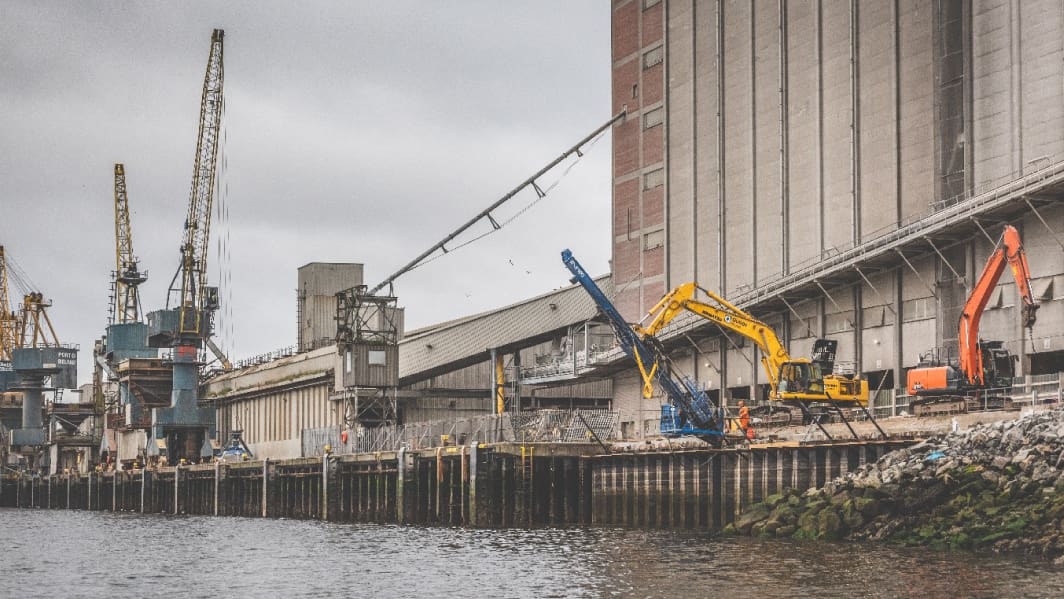
Quinn Piling was commissioned to install 11 No. high capacity (1,135kN), permanent ground anchors to support a 34m section of new sheet pile wall at West Twin Wharf, Belfast Harbour. The new wall was installed in front of the existing ‘failing’ wall, as part of remedial works.

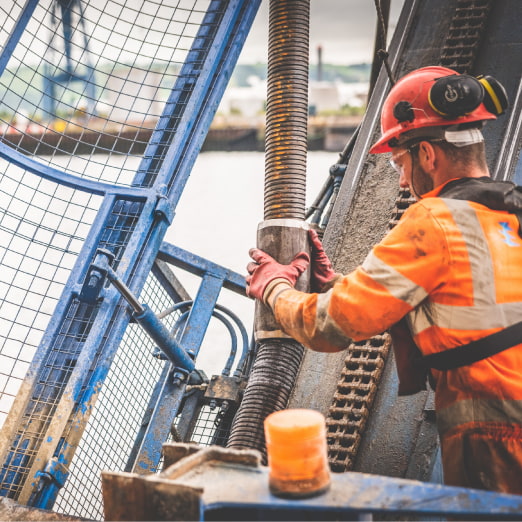
Drawing upon our vast experience of working in the Belfast Harbour area in recent years we overcame the challenging ground conditions, which consisted of the notorious soft estuarine deposits locally known as ‘Belfast sleech,’ along with boulder clay and weak sandstone. Aware of issues with ODEX type systems in this environment in the past, we opted to use the Ischebeck self-drill hollow bar system based upon the corrosion and thread being able to control crack width as specified. This self-drill solution was provided as an alternative to double corrosion protection anchors that were originally specified.

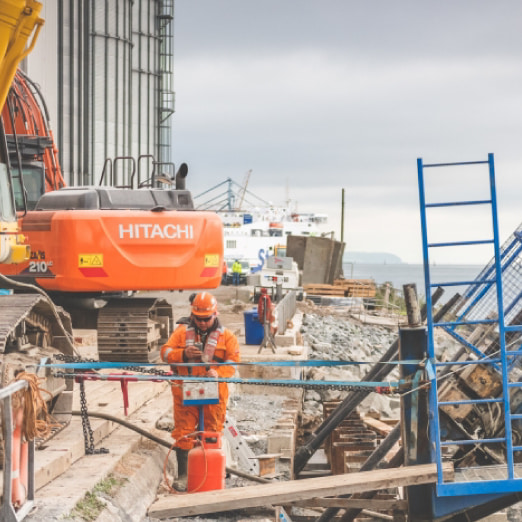
The project was also challenging in terms of access and logistics, due to the narrow space available. However, Quinn Piling was able to overcome this by taking extra measures to ensure that the project could be carried out efficiently and safely. These included placing timber sleepers to reduce bearing pressure of the drill rig on the ground, which reduced stress on the old quay wall and increased platform stability.
“The ground conditions at Belfast Harbour are notoriously challenging to work with, however Quinn Piling were able to overcome this with the insight and skill that only years of experience can bring.”

Quinn Piling Project Manager

Anchor Scope and Details

All 11no. ground anchors comprise Ischebeck Titan 103/51 self-drill bars with 220mm expendable drill bits. They were installed using a Eurodrill 8032 drilling head, mounted onto a Komatsu PC 450 base machine with a specially adapted drill mast.

The drilling and installation process went well, and full grout flush was maintained throughout the operation. The driller was also able to note when the sandstone bedrock was encountered at 21.5m depth, approximately 1m higher than expected.

All anchors were successfully tested and locked off at 626kN. The anchor heads were finally encased in concrete within recesses in the RC capping beam to provide permanent corrosion protection.

Preliminary Test Anchor

The original Double Corrosion Protection (DCP) anchor solution would have been very difficult to install in these ground conditions and also much more expensive. Therefore in order to demonstrate suitability of the self-drill alternative a preliminary test anchor was necessary. This was done to validate the suitability of the drill technique and the grout to ground bond design values. The test was carried out on a vertical anchor incorporating a 175mm expendable drill bit and was extended to 24.5m depth. The test was successful and confirmed the suitability of the anchors to provide a 60-year design life, allowing the main works to proceed.